Back to portfolio

ERP ADVISORY SERIES

ERP Success Starts Before Implementation

A practical advisory series for organizations that want to select, prepare and implement the right ERP system. It turns the implementation journey into clear business stages that reduce risk and keep technology aligned with real operational needs.
Business GoalsRequirementsGap AnalysisVendor SelectionChange ManagementGo Live

01 — Series overview

01ERP implementation success roadmap02خارطة نجاح تطبيق نظام ERP03لماذا تفشل بعض مشاريع ERP قبل أن تبدأ؟04Why Some ERP Projects Fail Before They Begin05Why Gap Analysis Matters in ERP Projects06لماذا تحليل الفجوات بالغ الأهمية في مشاريع ERP؟07جمع متطلبات العمل: الأساس الحقيقي لنجاح مشروع ERP08Business Requirements: The Foundation of ERP Success09Choosing the Right ERP System10اختيار نظام ERP المناسب11Project Planning: Turning ERP Strategy into Action
01ENGLISH EDITION

ERP implementation success roadmap

The roadmap starts with clear business objectives, documented requirements and a structured gap analysis before any system is selected. It then moves through vendor evaluation, configuration, testing, training and go-live. The message is simple: a successful ERP project is a business transformation supported by technology—not merely a software installation.
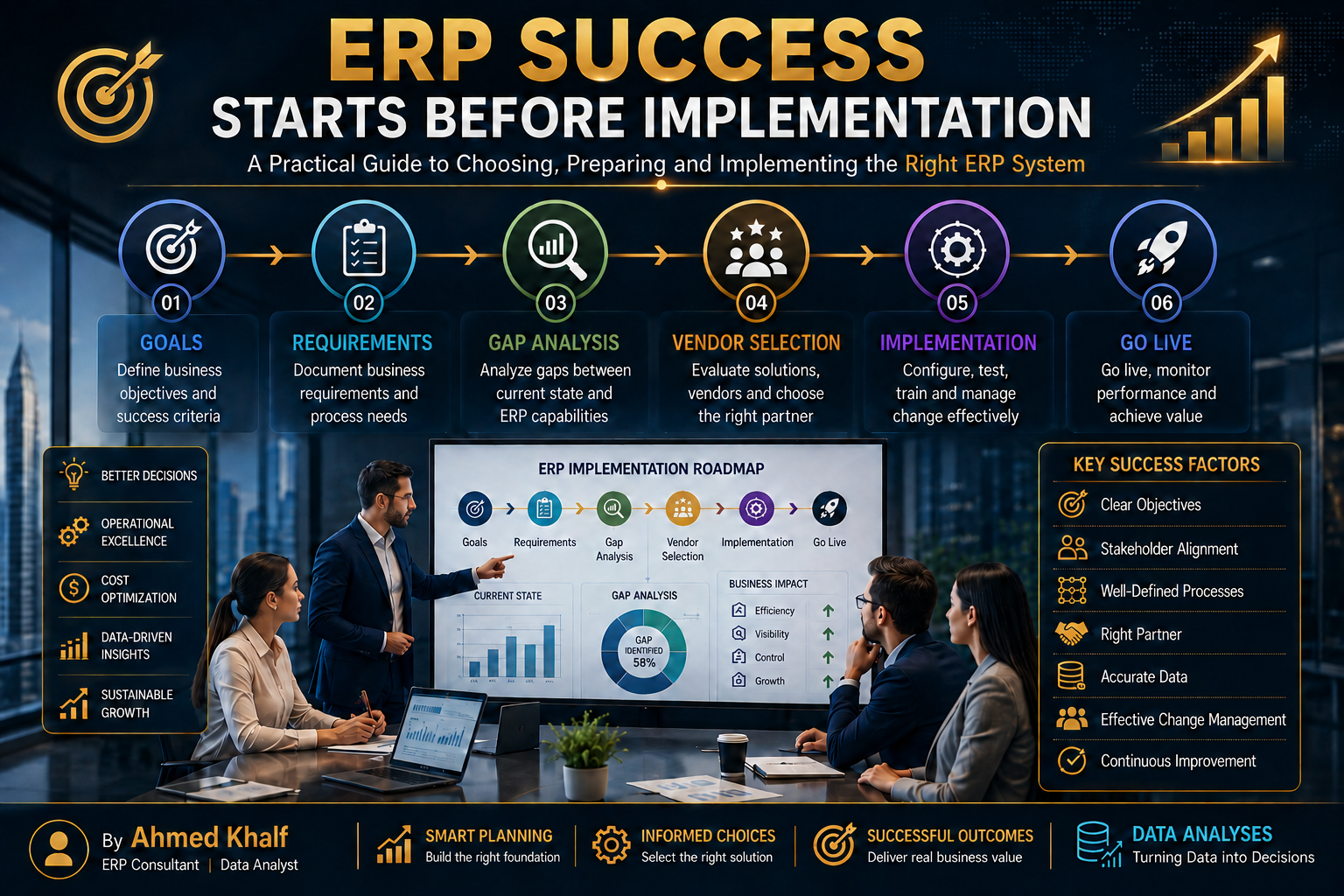
English ERP implementation success roadmap by Ahmed Khalf
02ARABIC EDITION

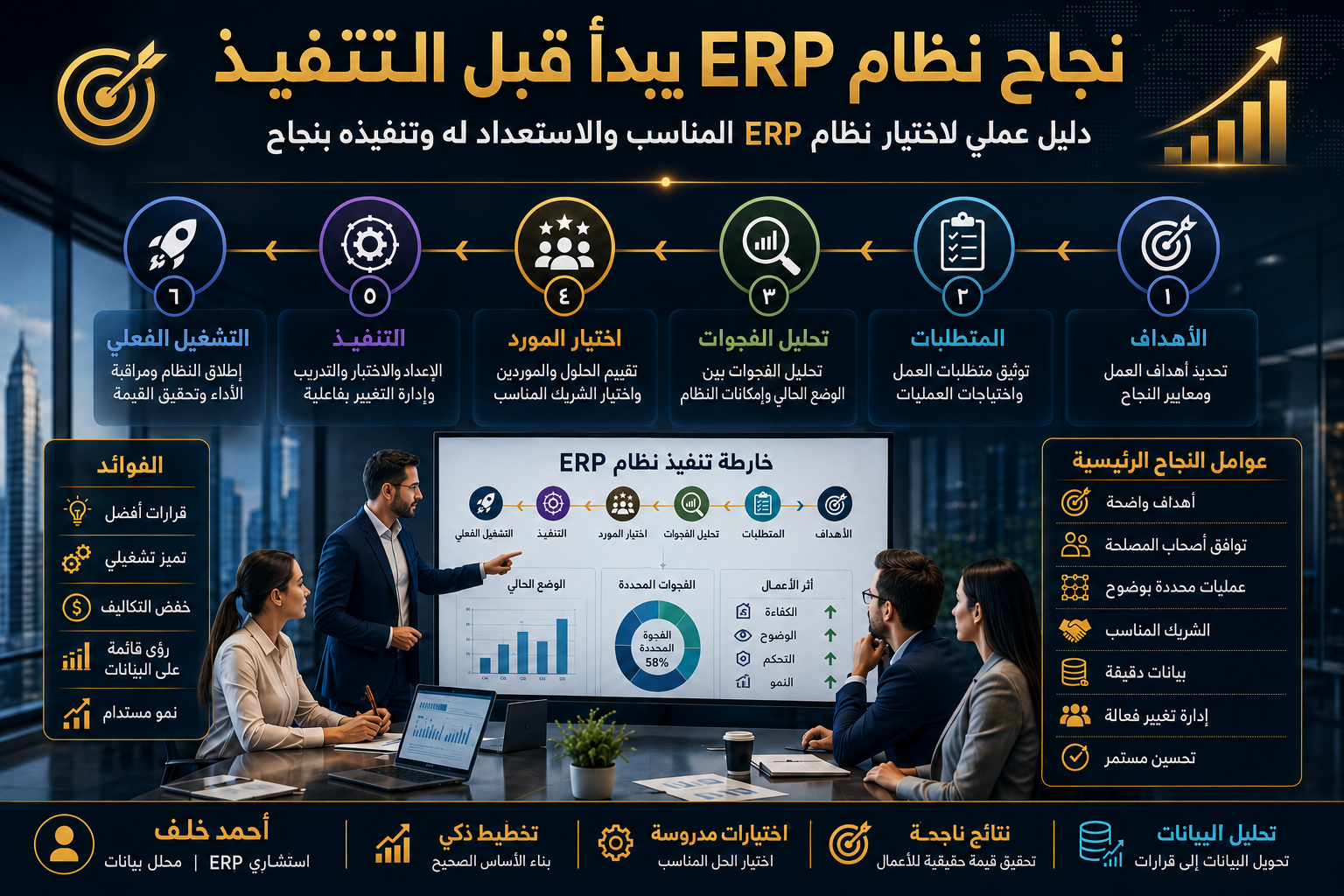
خارطة نجاح تطبيق نظام ERP

تقدم النسخة العربية نفس الرحلة بلغة عملية تناسب أصحاب القرار في المنطقة العربية: تبدأ بتحديد الأهداف وتوثيق المتطلبات، ثم تحليل الفجوات واختيار المورد، وصولًا إلى التنفيذ والتشغيل الفعلي. وتوضح كذلك عوامل النجاح الأساسية، مثل توافق أصحاب المصلحة ودقة البيانات وإدارة التغيير والتحسين المستمر.

خارطة نجاح تطبيق نظام ERP بالعربية من إعداد أحمد خلف
03ARABIC EDITION · PART 01

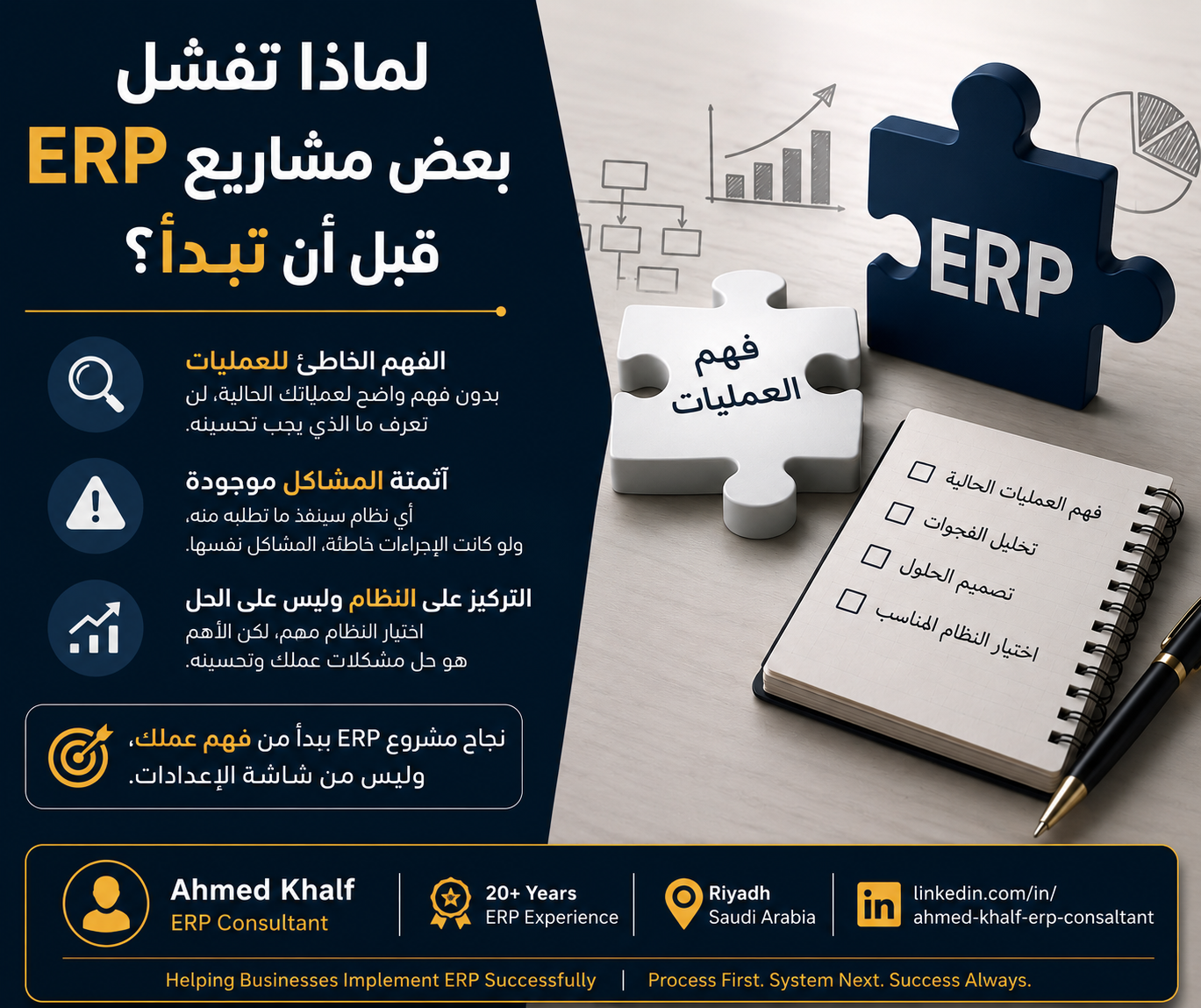
لماذا تفشل بعض مشاريع ERP قبل أن تبدأ؟

يوضح هذا الجزء أن أول أسباب الفشل هو البدء في اختيار النظام قبل فهم طريقة عمل المؤسسة. فغياب الرؤية الواضحة للعمليات يمنع تحديد نقاط الضعف، وأتمتة إجراءات غير سليمة لا تعالج المشكلة بل تجعلها تتكرر بسرعة أكبر. لذلك يبدأ المشروع الناجح بفهم العمليات الحالية وتحديد الاختناقات وتحليل الفجوات ثم تصميم الحل المناسب.

لماذا تفشل بعض مشاريع ERP قبل أن تبدأ — النسخة العربية
04ENGLISH EDITION · PART 01

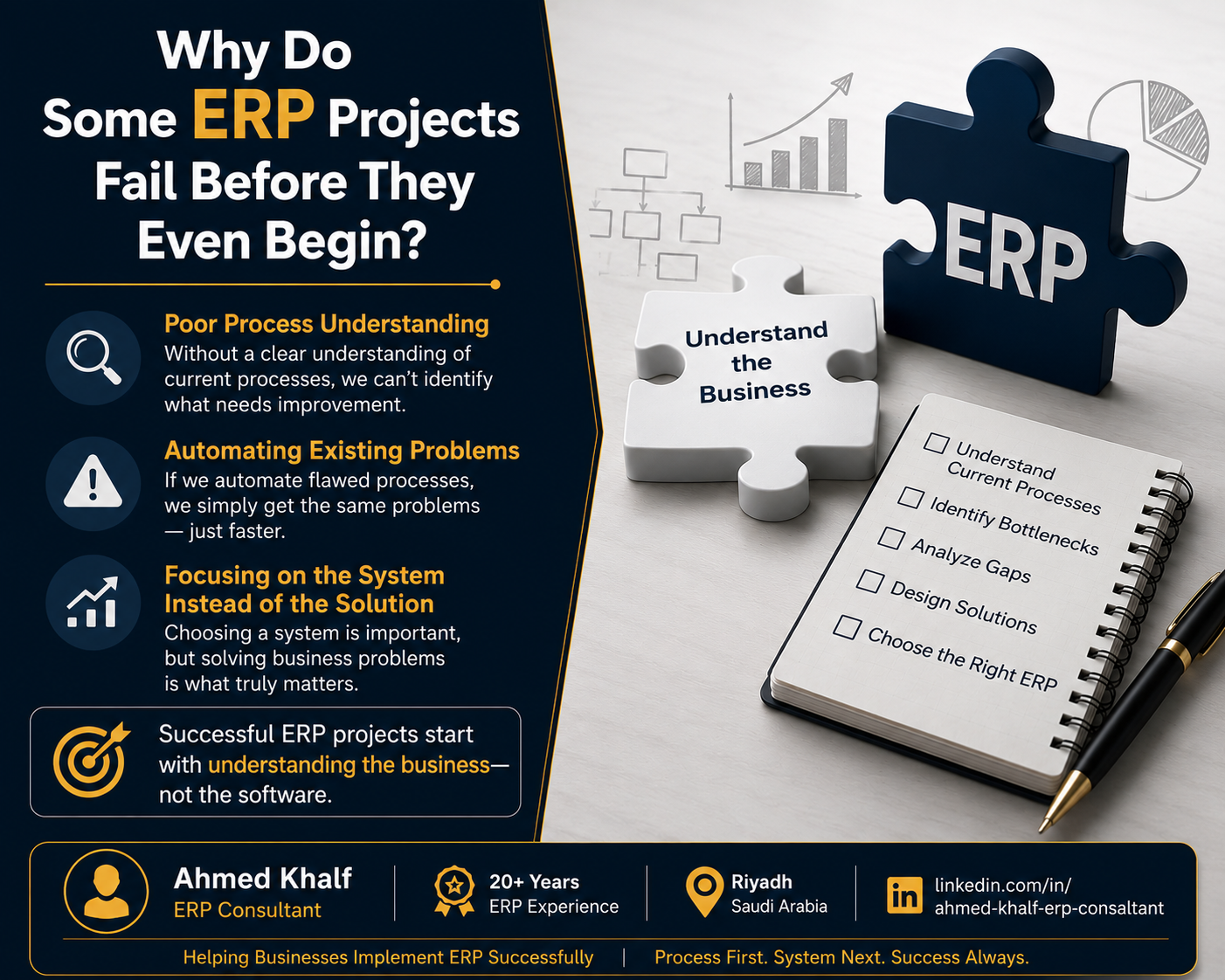
Why Some ERP Projects Fail Before They Begin

This first topic explains why ERP selection should never precede process understanding. When current workflows, bottlenecks and gaps are unclear, the new system may simply automate existing problems. A stronger approach starts with the business, defines what must improve and then selects the ERP solution that best supports those needs.

Why some ERP projects fail before they begin — English edition
05ENGLISH EDITION · PART 02

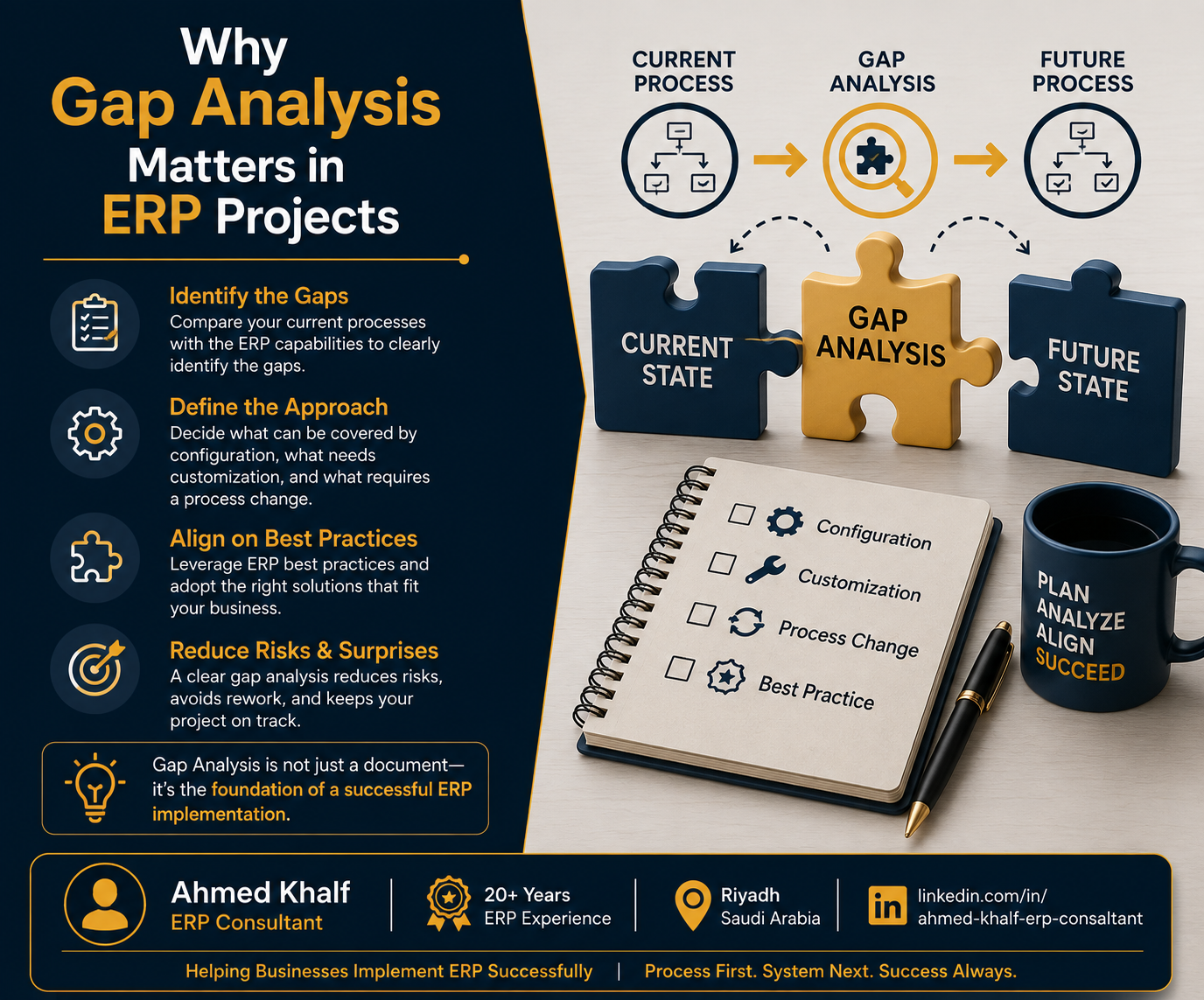
Why Gap Analysis Matters in ERP Projects

Gap analysis connects the current way of working with the future process the organization wants to achieve. It identifies where standard ERP capabilities are sufficient and where configuration, customization or process change is required. Making these decisions early aligns the project with best practices, reduces surprises and prevents costly rework during implementation.

Why gap analysis matters in ERP projects — English edition
06ARABIC EDITION · PART 02

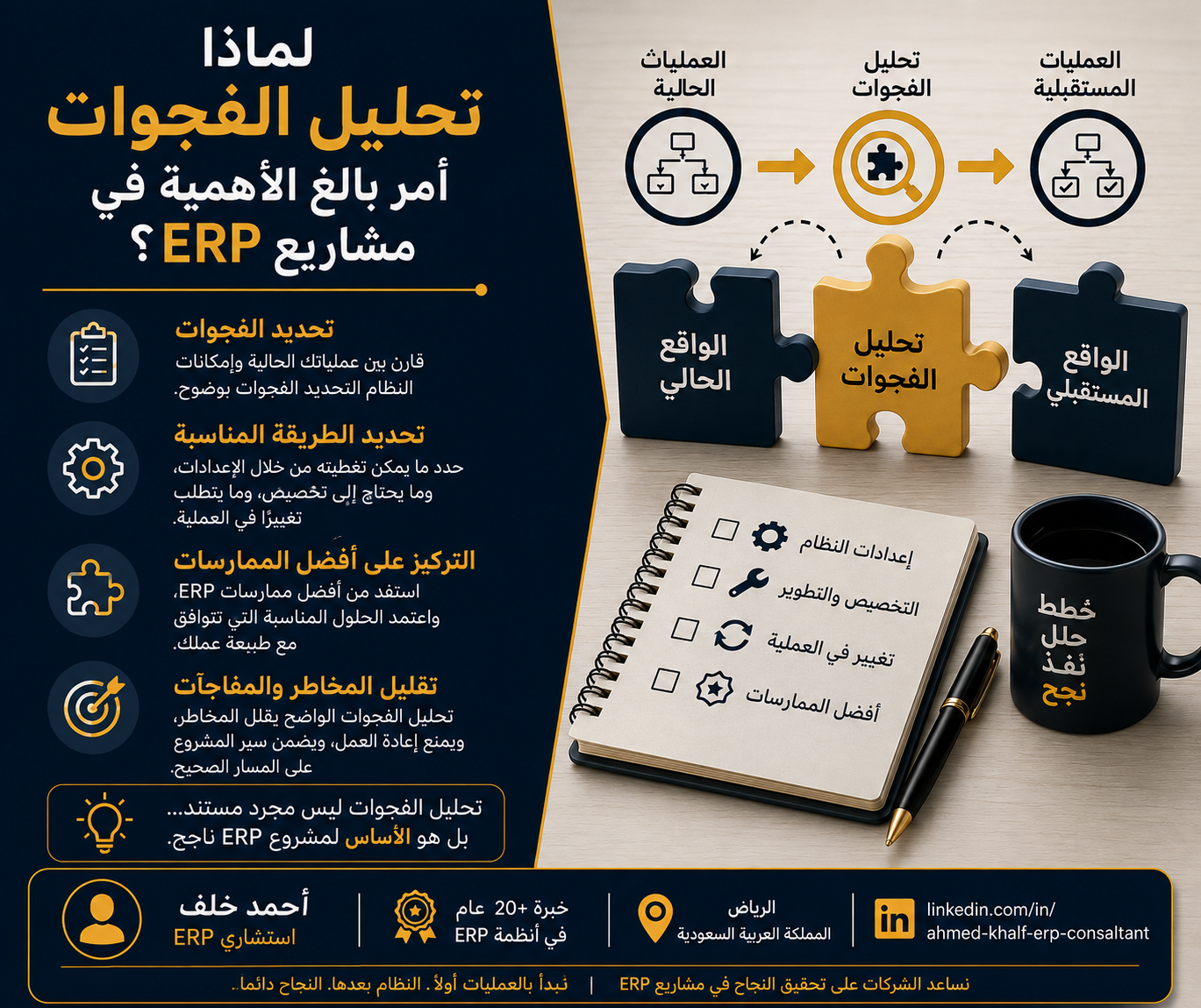
لماذا تحليل الفجوات بالغ الأهمية في مشاريع ERP؟

يربط تحليل الفجوات بين الواقع الحالي والعمليات المستقبلية المستهدفة، ويحدد ما يمكن تغطيته بإعدادات النظام القياسية وما يحتاج إلى تخصيص أو تغيير في الإجراء. حسم هذه النقاط مبكرًا يساعد المؤسسة على تبنّي أفضل الممارسات، ويقلل المخاطر والمفاجآت وإعادة العمل أثناء التنفيذ.

أهمية تحليل الفجوات في مشاريع ERP — النسخة العربية
07ARABIC EDITION · PART 04

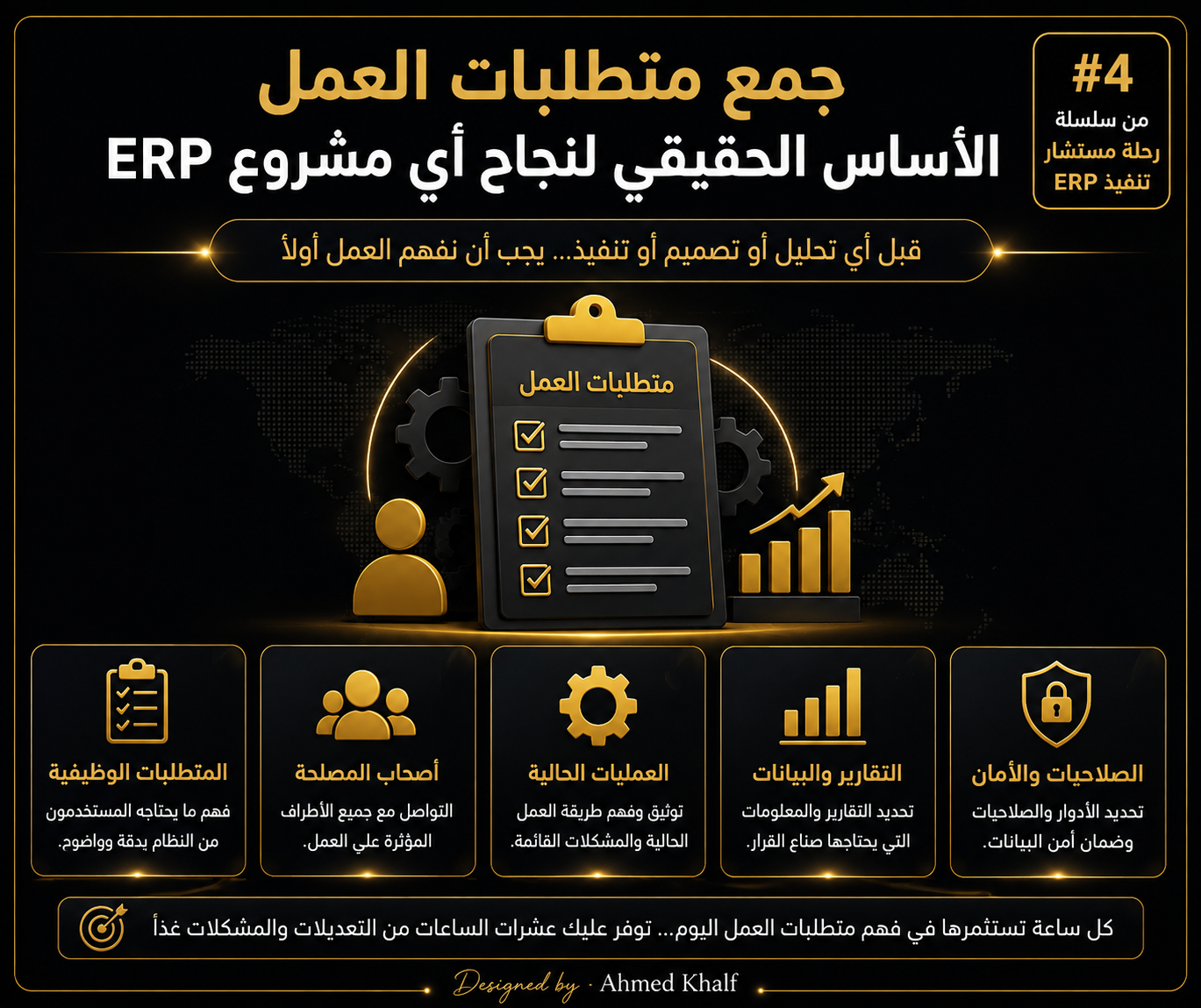
جمع متطلبات العمل: الأساس الحقيقي لنجاح مشروع ERP

تبدأ هذه المرحلة بفهم طريقة تنفيذ العمليات الحالية والتواصل مع أصحاب المصلحة لاكتشاف نقاط الألم والاحتياجات الفعلية. ثم تُوثق المتطلبات الوظيفية وغير الوظيفية، والتقارير ومؤشرات الأداء المطلوبة، والأدوار والصلاحيات ومستويات الوصول. هذا التوثيق يحول احتياجات العمل إلى مرجع واضح لبناء الحل الصحيح وتجنب التعديلات المكلفة لاحقًا.

جمع متطلبات العمل لنجاح مشروع ERP — النسخة العربية
08ENGLISH EDITION · PART 04

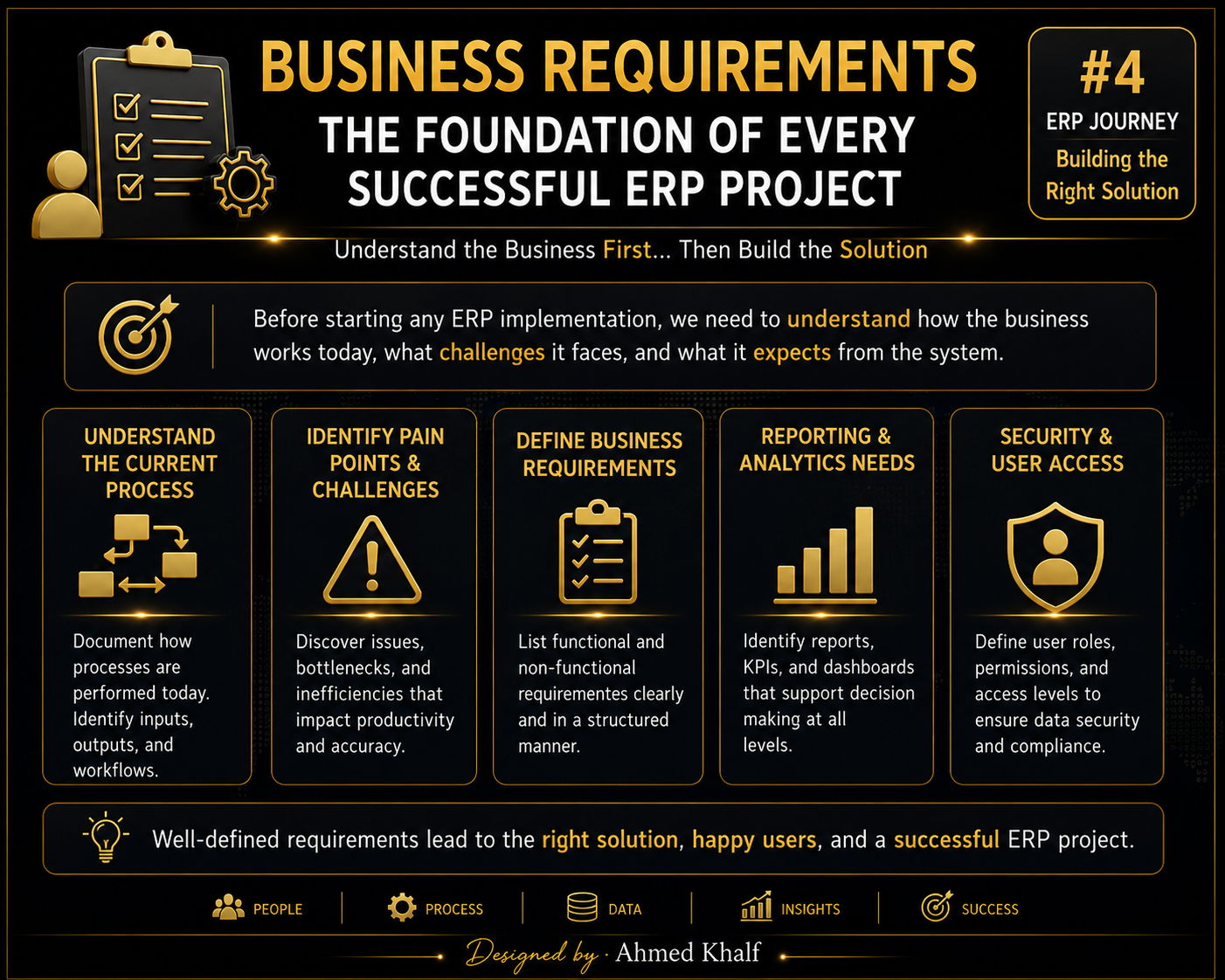
Business Requirements: The Foundation of ERP Success

Business requirements translate how the organization works into a clear implementation reference. The team documents current workflows, pain points, functional and non-functional needs, reporting expectations, user roles and access controls. Well-defined requirements keep the proposed solution aligned with business priorities, improve user acceptance and reduce costly changes during delivery.

Business requirements as the foundation of ERP success — English edition
09ENGLISH EDITION · PART 05

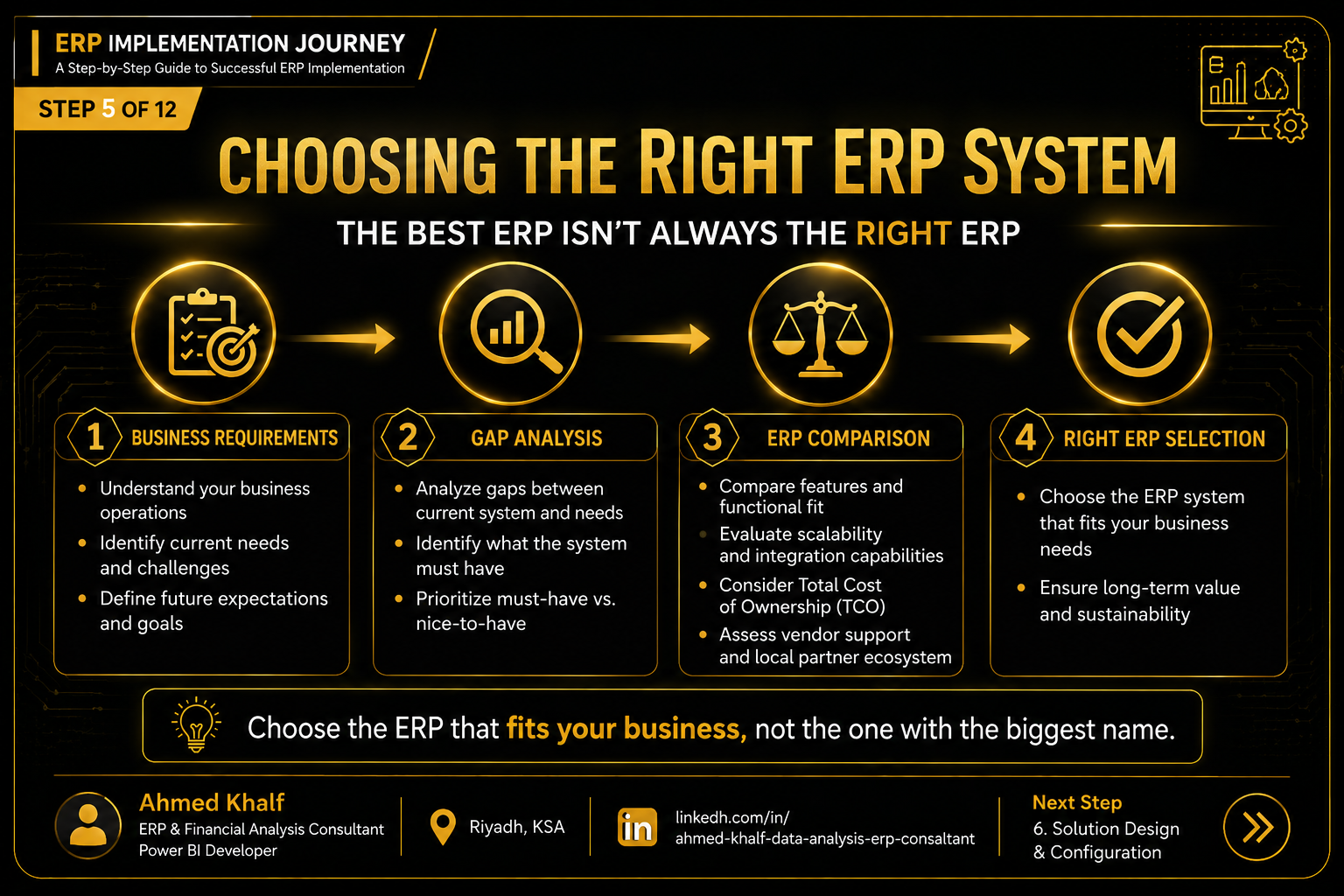
Choosing the Right ERP System

The right ERP is not automatically the largest or most famous product. Selection should begin with business requirements and gap-analysis priorities, then compare functional fit, scalability, integration, total cost of ownership, vendor support and the local partner ecosystem. The best choice is the system that supports today’s operations while remaining sustainable as the organization grows.

Choosing the right ERP system — English edition
10ARABIC EDITION · PART 05

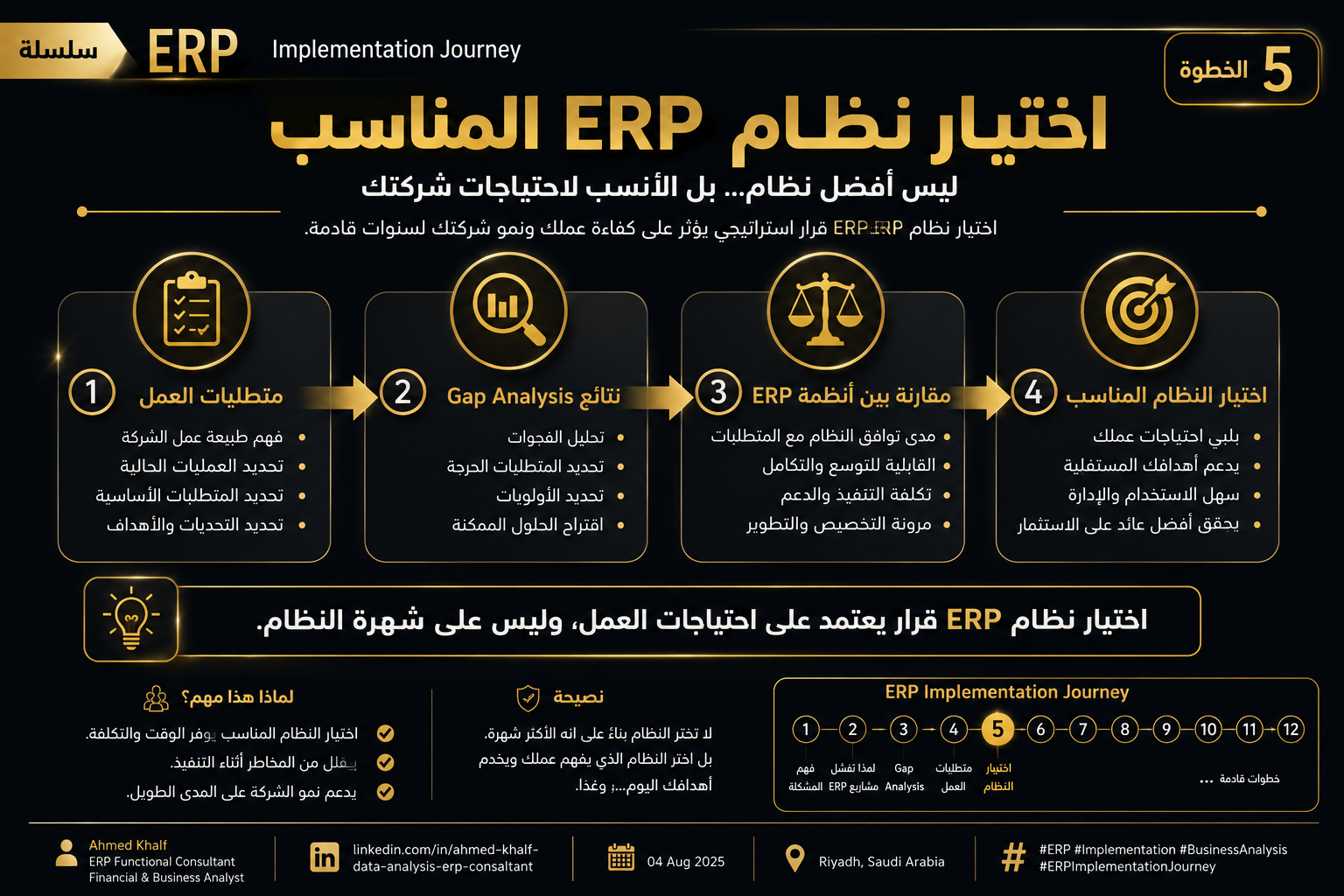
اختيار نظام ERP المناسب

لا يعتمد الاختيار الصحيح على شهرة النظام، بل على توافقه مع احتياجات المؤسسة. تبدأ المقارنة بمتطلبات العمل ونتائج تحليل الفجوات، ثم تشمل الملاءمة الوظيفية وقابلية التوسع والتكامل وتكلفة الملكية والدعم ومرونة التخصيص. النظام المناسب هو الذي يخدم العمليات الحالية ويدعم الأهداف المستقبلية ويحقق قيمة طويلة المدى.

اختيار نظام ERP المناسب — النسخة العربية
11BILINGUAL EDITION · PART 06

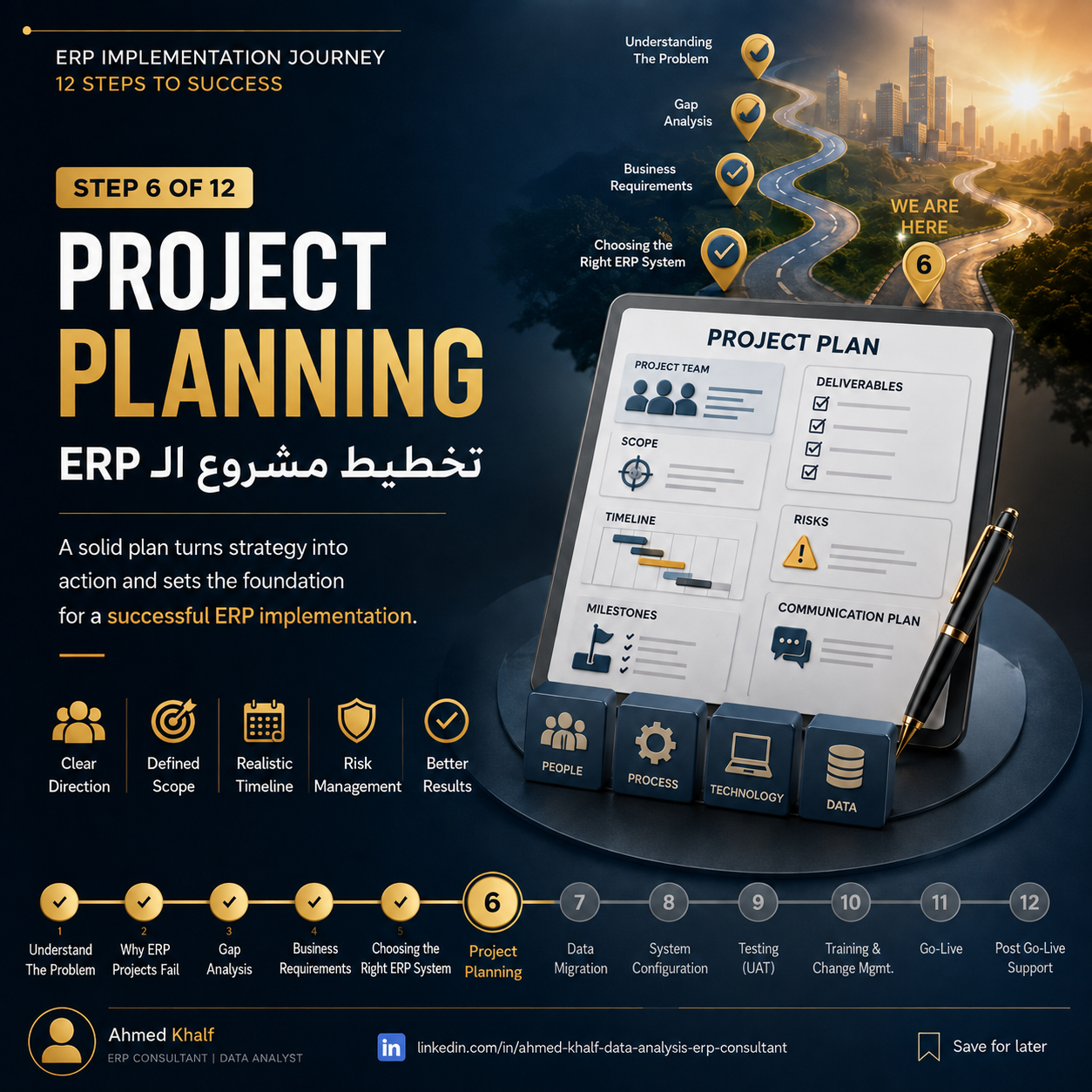
Project Planning: Turning ERP Strategy into Action

A solid project plan turns ERP strategy into executable work. It defines the project team, scope, deliverables, realistic timeline, milestones, risks and communication plan. Aligning people, processes, technology and data at this stage gives the implementation clear direction, stronger risk control and a better foundation for measurable results.

ERP implementation journey step 6 project planning by Ahmed Khalf

02 — ERP SUCCESS

A practical guide for better ERP decisions

This opening roadmap is the foundation of a step-by-step series. Each upcoming stage will explain what decision-makers, process owners and implementation teams should do to move from business need to sustainable value.